Never enough
- Voice of Loren Allred singing Never Enough
- Mimed by Rebecca Ferguson
- From the movie The Greatest Showman
Never enough means more
- It’s ambition, drive, wanting
- It’s a feeling
- that what you are
- or what you have
- is never enough
- It’s self-fulfilling
- never enough begets more and it’s never enough
- It’s a choice
Never enough in the workplace
- Excessive working hours
- Imposter syndrome
- Unreasonable standards
- Bullying and harassment
Paradox
More is responsible for the best and worst of humanity. Moonshots and climate change.
- It’s the drive to be better
- to improve
- to innovate
- to create
- to go further
- It’s the drive to have more
- to consume more
- to hoard more
- to dominate
- to exploit
- Never enough is excessive ‘more’
The alternative
- Good enough
Spectrum
- Between Acceptance and Ambition
- Characteristics of each position
- ‘More’ moves up
- ‘Good enough’ moves down
All aspects of life
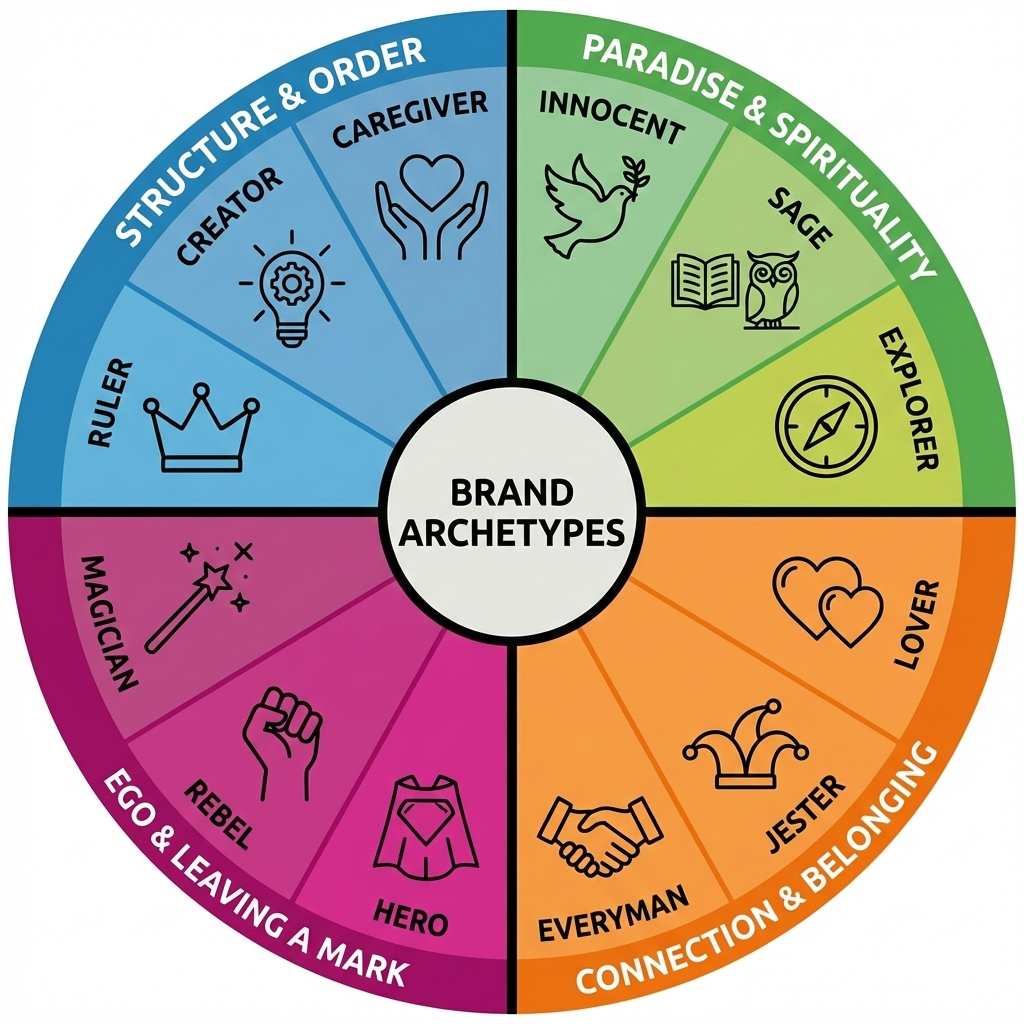
- Archetypal maps
- Carl Jung
- Toni Anna Wolf
- Moore and Gillette
- Jean Shinoda Bolen
- Not personality types, but parts of a personality
- You have all of them
Carl Jung
Carl Jung’s archetypes are universal, inherited patterns and symbols (like the Hero, Caregiver, Explorer) residing in the collective unconscious that influence human behavior, dreams, myths, and stories, representing fundamental aspects of the psyche, with major ones including the Persona, Shadow, Anima/Animus, and the Self, forming the basis for understanding personality and the journey towards wholeness (individuation).
Key Concepts
- Collective Unconscious: A shared reservoir of human experiences and instincts, distinct from personal unconsciousness.
- Individuation: The lifelong process of integrating these archetypes to achieve psychological wholeness and self-realization.
- Persona: The social mask we present to the world; our public self.
- Shadow: The repressed, darker, or unconscious aspects of ourselves.
- Anima/Animus: The feminine (Anima) in men and the masculine (Animus) in women, representing the opposite gender’s qualities within the psyche.
- Self: The central archetype representing wholeness, unity, and the goal of individuation, often symbolized by mandalas or spiritual figures.
Examples of Archetypes
- The Hero: Represents strength, overcoming obstacles, and restoring order, but must learn vulnerability.
- The Wise Old Man/Woman: Embodies wisdom, guidance, and spiritual insight.
- The Caregiver: Nurturing, forgiving, and protective qualities, but also potentially smothering.
- The Child: Represents potential, new beginnings, and innocence.
How They Work
Archetypes manifest as recurring figures, themes, or symbols in our dreams, myths, fairy tales, and personal lives, influencing our motivations and identity. Understanding them helps individuals recognize their inner conflicts, strengths, and weaknesses, guiding personal growth towards integration and balance.
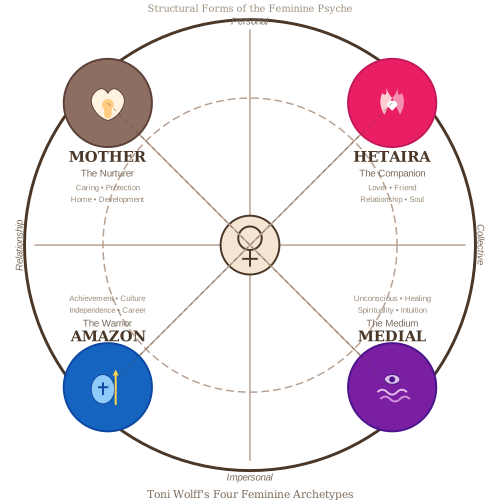
Toni Anna Wolff
Toni Wolff’s major paper, titled “Structural Forms of the Feminine Psyche,” describes four fundamental female archetypes, or “forms,” that represent different aspects of a woman’s psychological development.
Toni Wolff’s Four Feminine Archetypes
The four archetypes are arranged on a quadrant chart with two axes: the personal (Mother vs. Hetaira) and the impersonal (Amazon vs. Medial Woman). Each woman has a primary form, and the path to psychological wholeness (individuation) involves integrating the others, particularly the opposing one.
The four forms are:
- The Mother (and Spouse): This archetype finds fulfillment in nurturing, caring for, and protecting what is undeveloped or in need of help. This includes raising children, making a home, or pursuing “motherly” professions like nursing or teaching. The shadow side can manifest as being overprotective, anxious, or losing oneself entirely in the role.
- The Hetaira (Companion, Lover, Friend): The Hetaira’s primary focus is on the quality of personal relationships, particularly with a partner. She encourages the development of a man’s inner life and individual interests. The shadow side involves potentially sacrificing her own dreams for a partner’s or encouraging impractical choices.
- The Amazon: The Amazon is independent, self-contained, and focused on objective achievements and contributing to the collective cultural values of her time. In modern terms, she may be a career woman. The shadow side is an over-ambition that causes the neglect of personal relationships.
- The Medial Woman: This type is immersed in the collective unconscious and the psychic atmosphere of her environment. Her qualities often manifest in areas like spirituality, the arts, healing, or research (e.g., as a seer or a medium). The shadow side can involve a lack of ego strength, making it difficult to distinguish between personal and collective unconscious content, which can be confusing or destructive.
Wolff presented her theory independently of C.G. Jung, with whom she had a close professional and personal collaboration, and the model is seen as a complement to his work on psychological functions. Her paper was published in German in 1951 and translated into English as Structural Forms of the Feminine Psyche.
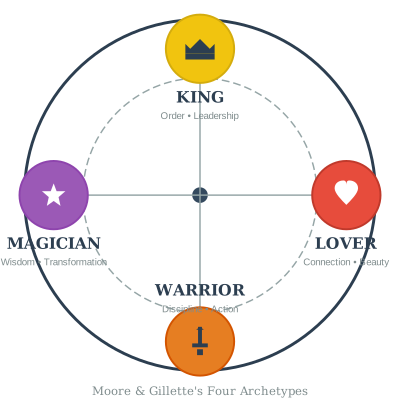
Moore and Gillette
King, Warrior, Magician, Lover by Robert Moore and Douglas Gillette is a foundational book in the men’s movement, presenting four mature male archetypes—King (order, leadership), Warrior (discipline, action), Magician (wisdom, transformation), and Lover (connection, beauty)—and contrasting them with immature patterns (Divine Child, Oedipal Child, Trickster, Hero) to guide men toward healthy, whole masculinity by integrating these energies for personal growth and community service.
The Four Mature Archetypes
- King: Embodies responsibility, order, integrity, and providing for the community; the centered ruler of one’s inner and outer world.
- Warrior: Represents courage, discipline, focus, and the ability to confront adversity and defend what’s good and true.
- Magician: The innovator and creator, bridging the known and unknown, bringing insight and transformation, and finding solutions in chaos.
- Lover: Connects one to others and the world through passion, joy, beauty, and deep feeling; often the most neglected archetype (Source: Oliver Cowlishaw).
Key Concepts
- Man Psychology: Offers a framework for understanding the complexities of the male psyche beyond stereotypes like “toxic masculinity”.
- Integration: The goal is not to be one archetype but to integrate all four for a balanced, mature self (Source: Reddit user).
- Shadow Work: The book helps men identify and work with underdeveloped or negative aspects (shadows) of these archetypes to achieve wholeness (Source Bookshop.org).
- Impact: Provides a roadmap for men to find purpose, improve relationships, and develop emotional maturity (Source: Gents Cafe).
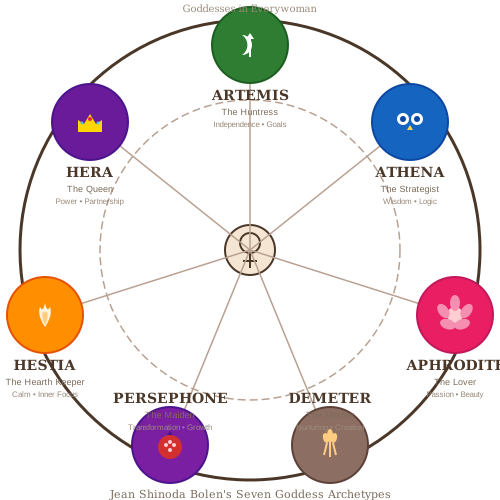
Jean Shinoda Bolen
Jean Shinoda Bolen, a Jungian analyst, popularized the use of Greek Goddess Archetypes (Artemis, Athena, Hestia, Hera, Demeter, Persephone, Aphrodite) in her book Goddesses in Everywoman, representing distinct personality patterns and strengths within women, helping them understand different aspects of femininity, including both potential gifts and challenges, and encouraging conscious integration for personal growth. She later expanded this, exploring archetypes in older women and the broader feminine spirit, linking them to self-comprehension and empowerment beyond traditional roles.
The Core 7 Goddess Archetypes
Bolen uses these goddesses as metaphors for different psychological patterns:
- Artemis (The Huntress): Independent, autonomous, focused on goals, often a loner.
- Athena (The Warrior/Strategist): Strategic, logical, skilled, protective.
- Hestia (The Hearth Keeper/Wise Woman): Calm, centered, domestic, inner focus.
- Hera (The Queen): Power, status, relationships, but can struggle with jealousy.
- Demeter (The Nurturer/Mother): Caring, nurturing, providing, deeply connected to creation.
- Persephone (The Maiden/Queen): Represents growth, transformation, the underworld (shadow self).
- Aphrodite (The Lover/Creative): Passion, beauty, sensuality, connection.
Key Concepts in Bolen’s Work
- Archetypes as Inner Guides: These goddesses aren’t literal identities but inherent patterns of energy within every woman, influencing behavior and emotions.
- Consciousness & Choice: Recognizing these archetypes helps women move from being unconsciously acted upon by these forces to consciously choosing which to cultivate and develop.
- Beyond Stereotypes: Bolen’s work challenges patriarchal myths and limitations, showing how women can embrace a full spectrum of feminine power, including aspects of the “wild woman” and mature wisdom.
- Empowerment: By understanding these archetypes, women can become the “heroines” of their own lives, integrating strengths and overcoming weaknesses.
The above summaries were partly generated by AI.
Ambition map
- Whichever map works best for you
- Balance acceptance and ambition
- per part
- No right answers
- only what you believe is right for you
- Examples, I want to be:
- more ambitious as a citizen
- better world, cleaner planet
- I feel like it’s never enough
- more accepting as a manager
- praise my colleague’s work
- implicitly tell my team they’re good enough
- create happiness and contentment
- because that’s what I believe is most motivating
- watch out for complacency or lethargy
- don’t go too far from ambition
- praise my colleague’s work
- more accepting as a friend
- tell myself I’m good enough
- more ambitious as a writer
- out of my comfort zone
- more challenging in my content
- less ambitious as an earner
- good enough means I have enough
- less ambitious as an achiever
- I’m far too driven
- I need to pull myself back from my workaholism
- good enough means I’ve done enough
- more ambitious as a citizen
Questions
- What areas of your life are working really well?
- Where have you got the balance just right for you?
- Where do you want to be more accepting, or curb your ambition?
- Where do you want to be more ambitious, to push?
- What’s your never enough?
Leave a Comment